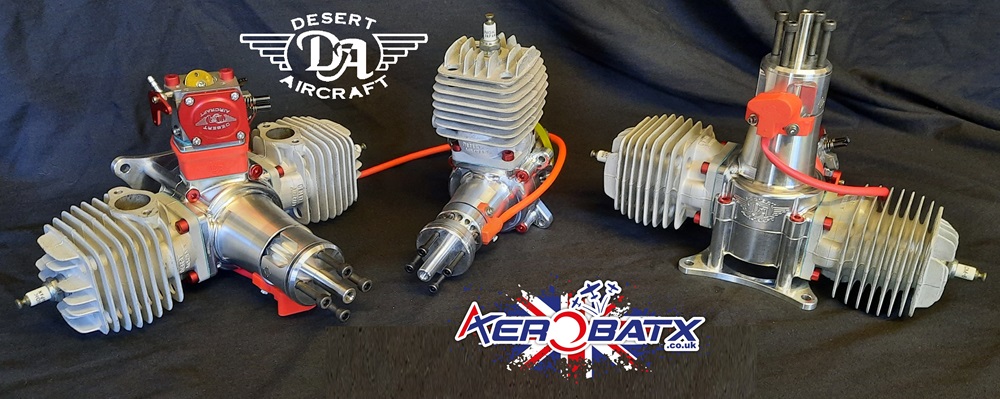

AerobatX Engine Run-In Procedure
General
For our modern 2-stroke petrol engines, there is no prolonged or special bench run-in procedure required.
Our recommendation is to install the engine in the aircraft, set it up correctly, and run it under normal operating conditions. The engine will benefit from being run under load and with proper cooling airflow, rather than spending hours running on the ground.
Fuel & Oil
Oil mix: 40:1
Use a good-quality full-synthetic 2-stroke oil from the first start. There is no requirement to use mineral oil during an initial running-in period.
We highly recommend Red Line 2-Stroke Racing Oil. From our extensive experience running and servicing engines using this oil, it provides excellent lubrication while also producing exceptionally clean combustion with very little residue.
Always ensure the fuel and oil are thoroughly mixed before filling the aircraft.
Propeller
Use the propeller you intend to fly the aircraft with.
There is no requirement to fit a smaller or otherwise different “run-in” propeller. The engine can be run and flown on its normal flight propeller, provided it is the correct specification for the engine and application.
Initial Setup & Running
Before starting the engine, check that the carburettor needle settings are in accordance with the engine manufacturer's manual.
Once installed in the aircraft:
1. Start the engine and allow it to warm up properly.
2. Check and adjust the low and high needles as required.
3. Aim for a reliable, consistent idle.
4. Check that the transition from idle to full throttle is smooth, without hesitation or sagging.
5. At full throttle, the engine should hold a consistent RPM without signs of ‘sagging’ (being excessively lean).
A few ground runs to establish the correct settings and familiarise yourself with the engine are perfectly acceptable.
Remember that the engine is new, so do not run it for extended periods at high RPM on the ground, particularly with the cowl fitted and without adequate airflow.
Once the basic settings have been confirmed, go flying.
Flying the aircraft provides the engine with the airflow and cooling it was designed to receive and allows it to run under varying loads and RPM rather than sitting at a constant RPM on the ground.
For the first few flights, avoid unnecessarily long periods of continuous full-throttle running. Vary the throttle and allow the engine to experience different loads and RPM as you would during normal flying. Some Great IMAC style flights with large open aerobatics, uplines and downlines that will heat cycle the engine nicely are great.
Idle-Up
We recommend using an idle-up on RC aircraft as part of a normal engine setup, and it is particularly useful with a new engine.
Set a radio switch to provide two idle settings:
• Normal/landing idle: your normal low idle. – NOTE this is where you must set the low end needle.
• Flight idle: approximately 200–300 RPM higher.
The slightly higher flight idle provides an additional margin of reliability during flight, particularly during prolonged downlines, high-G manoeuvres or other situations where the engine is required to maintain a reliable idle.
It is also useful during the initial running period when the engine may still be slightly richer than its final operating setting. The higher idle helps reduce the possibility of the engine dropping too low or stopping when the throttle is closed.
Bench Running
Bench running is optional, not a requirement.
If you are unfamiliar with petrol engines, or simply want to become familiar with the engine before installing it in the aircraft, there is absolutely nothing wrong with carrying out some bench running.
Provided the engine is securely mounted, correctly fuelled and has adequate cooling, this will not harm the engine.
However, there is no benefit in running a new engine for hours on the bench simply because it is new. A correctly installed engine is better evaluated and operated in the aircraft, where it receives proper cooling airflow and runs under varying loads.
In Summary
40:1 full-synthetic oil mix → correct flight propeller → manufacturer's needle settings → warm the engine → check idle, transition and full throttle → fit the cowl → fly.
There is no need for an extended or complicated running-in procedure. Treat the engine sensibly while new, ensure it is correctly tuned and adequately cooled, and allow normal flying to complete the bedding-in process.
Clive McInnes – AerobatX